
AI-Powered VoIP Phone System: The Future of Veterinary Communication
Introduction
Veterinary clinics today face a communication challenge unlike any previous generation of practices. Pet owners expect immediate responses, convenient appointment scheduling, accurate information, and seamless communication across every interaction.
At the same time, veterinary teams are managing increasing patient volumes, staffing shortages, administrative responsibilities, and rising client expectations.
Traditional phone systems were never designed for the modern veterinary environment. Missed calls, long hold times, voicemail backlogs, and inconsistent communication can result in lost appointments, frustrated pet owners, and unnecessary pressure on front-desk staff.
This is where an AI-Powered VoIP Phone System is transforming veterinary practice operations.
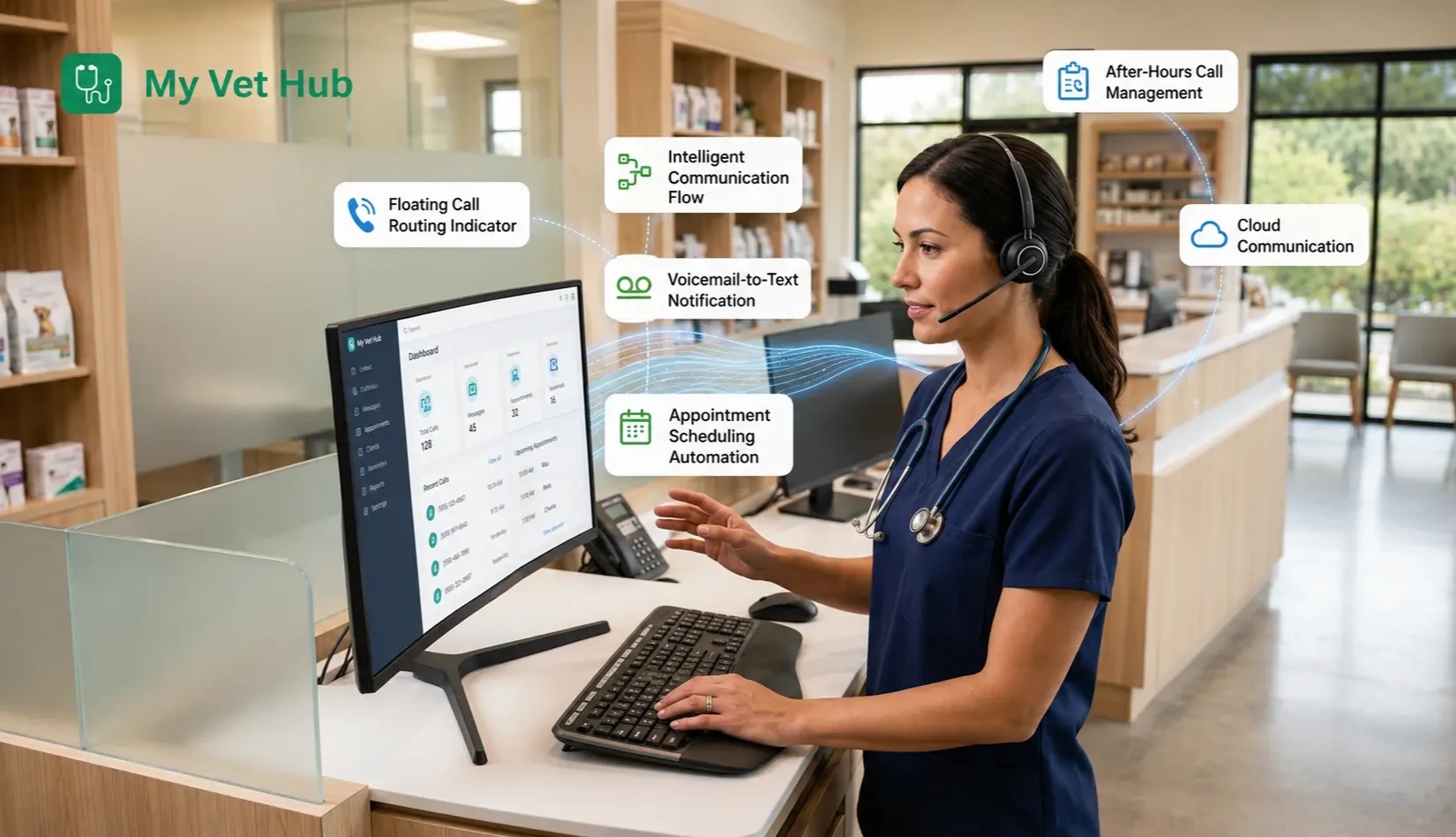
Unlike conventional phone systems, AI-enhanced VoIP technology combines cloud-based communication with intelligent automation, allowing veterinary clinics to handle calls more efficiently, improve responsiveness, and provide a superior client experience without increasing staffing requirements.
As veterinary medicine continues to evolve, communication technology is becoming a critical factor in both client satisfaction and practice growth.
Understanding AI-Powered VoIP Technology
VoIP (Voice over Internet Protocol) allows phone calls to be transmitted through internet connections instead of traditional telephone lines.
When artificial intelligence is integrated into a VoIP platform, the system becomes far more than a basic communication tool. It gains the ability to analyze conversations, route calls intelligently, automate responses, generate transcripts, and assist with scheduling and client interactions.
For veterinary practices, this means every incoming call becomes easier to manage while reducing the burden on reception teams.
The result is a communication system that actively supports clinic operations rather than simply transferring calls.
Why Traditional Veterinary Phone Systems Create Problems
Many veterinary hospitals still rely on legacy phone systems that struggle to support modern client expectations.
Common communication challenges include:
- Missed calls during busy hours
- Long wait times
- Limited after-hours support
- Manual appointment scheduling
- Difficulty tracking call performance
- Inconsistent client experiences
- Staff interruptions throughout the day
Every unanswered call represents a potential lost appointment. Every delayed response can affect client trust.
As call volumes increase, these issues become more difficult to manage using traditional communication methods.
Intelligent Call Routing Improves Efficiency
One of the most valuable features of an AI-powered VoIP system is intelligent call routing.
Instead of placing every caller into a generic queue, AI can evaluate the reason for the call and direct it to the most appropriate destination.
Examples include:
- Appointment scheduling requests
- Emergency inquiries
- Prescription refill questions
- Billing concerns
- Follow-up care questions
- New client inquiries
This reduces unnecessary transfers and helps clients reach the right person faster.
For veterinary teams, it minimizes interruptions and improves workflow efficiency throughout the clinic.
Reducing Missed Calls and Lost Revenue
Missed calls are one of the most overlooked sources of lost revenue in veterinary medicine.
When pet owners cannot reach a clinic quickly, they often contact another provider.
An AI-powered VoIP system helps capture more opportunities by ensuring calls are answered, routed appropriately, and documented for follow-up.
Features that support call capture include:
- Automated call handling
- Overflow call management
- After-hours communication
- Call-back automation
- Voicemail transcription
By minimizing communication gaps, clinics can convert more inquiries into appointments and improve overall client retention.
Supporting Veterinary Staff Without Adding Workload
Front-desk teams often serve as the communication hub of the entire practice.
Their responsibilities typically include:
- Answering phones
- Checking patients in
- Scheduling appointments
- Processing payments
- Responding to client questions
- Coordinating medical records
Managing these responsibilities simultaneously can lead to burnout and reduced efficiency.
AI-enhanced communication systems help by automating repetitive tasks and reducing call-related interruptions.
Instead of replacing staff, AI allows team members to focus on higher-value activities that require human interaction and clinical judgment.
This creates a more balanced and productive work environment.
Improving the Client Experience
Pet owners increasingly expect the same convenience they receive from other service industries.
They want:
- Fast responses
- Easy scheduling
- Clear communication
- Consistent support
- Convenient access to information
An AI-powered VoIP system helps deliver these expectations through automation and intelligent communication workflows.
Clients benefit from shorter wait times, more accurate information, and improved accessibility.
These improvements contribute directly to stronger client loyalty and higher satisfaction levels.
Real-Time Call Analytics and Business Insights
Modern veterinary communication systems generate valuable operational data.
AI-powered VoIP platforms can provide insights into:
- Peak call periods
- Missed call rates
- Appointment conversion rates
- Average call duration
- Client inquiry trends
- Service demand patterns
Practice owners can use this information to make more informed decisions regarding staffing, scheduling, marketing, and resource allocation.
Data-driven communication management creates opportunities for continuous improvement.
Call Recording and Transcription Benefits
Advanced VoIP systems can automatically record and transcribe conversations.
These capabilities offer several advantages:
Improved Accuracy
Staff can review conversations to verify details and reduce misunderstandings.
Better Training
Recorded calls provide valuable learning opportunities for team development.
Enhanced Accountability
Documentation supports consistent communication standards throughout the organization.
Stronger Follow-Up
Call summaries ensure important client requests are not overlooked.
This level of communication visibility is difficult to achieve using traditional phone systems.
After-Hours Communication Without Additional Staffing
Pet health concerns rarely occur only during business hours.
Many appointment requests and client inquiries happen during evenings, weekends, and holidays.
Traditional systems often direct callers to voicemail, creating delays and missed opportunities.
An AI-powered VoIP platform provides continuous availability by:
- Answering after-hours calls
- Collecting appointment requests
- Providing basic information
- Capturing emergency details
- Routing urgent cases appropriately
This ensures clients always receive a response, regardless of when they contact the clinic.
Integrating Communication Into Practice Growth
Communication is no longer simply an operational necessity.
It has become a growth strategy.
Veterinary practices that provide fast, convenient, and reliable communication experiences often outperform competitors in client retention and appointment conversion.
A modern AI-powered VoIP system helps clinics:
- Capture more appointments
- Improve responsiveness
- Reduce administrative burden
- Strengthen client relationships
- Enhance operational efficiency
These benefits create measurable business impact while supporting better patient care.
The Future of Veterinary Communication
The future of veterinary communication will continue moving toward intelligent automation and integrated client engagement.
As artificial intelligence becomes more sophisticated, communication platforms will increasingly assist with scheduling, documentation, analytics, follow-ups, and client support.
Practices that adopt these technologies today position themselves for long-term success in an increasingly competitive veterinary marketplace.
The clinics that communicate better will ultimately care better, retain more clients, and grow more sustainably.
Conclusion
An AI-Powered VoIP Phone System is no longer simply a technology upgrade. It is becoming an essential business tool for modern veterinary practices.
By reducing missed calls, improving client experiences, supporting staff efficiency, and providing valuable business insights, AI-enhanced communication systems help veterinary hospitals operate more effectively while delivering higher levels of service.
As client expectations continue to rise, veterinary practices that invest in smarter communication technology will be better equipped to meet demand, improve patient care, and achieve sustainable growth.