From First Search to Lifelong Client: Building a Connected Digital Journey for Veterinary Pet Owners
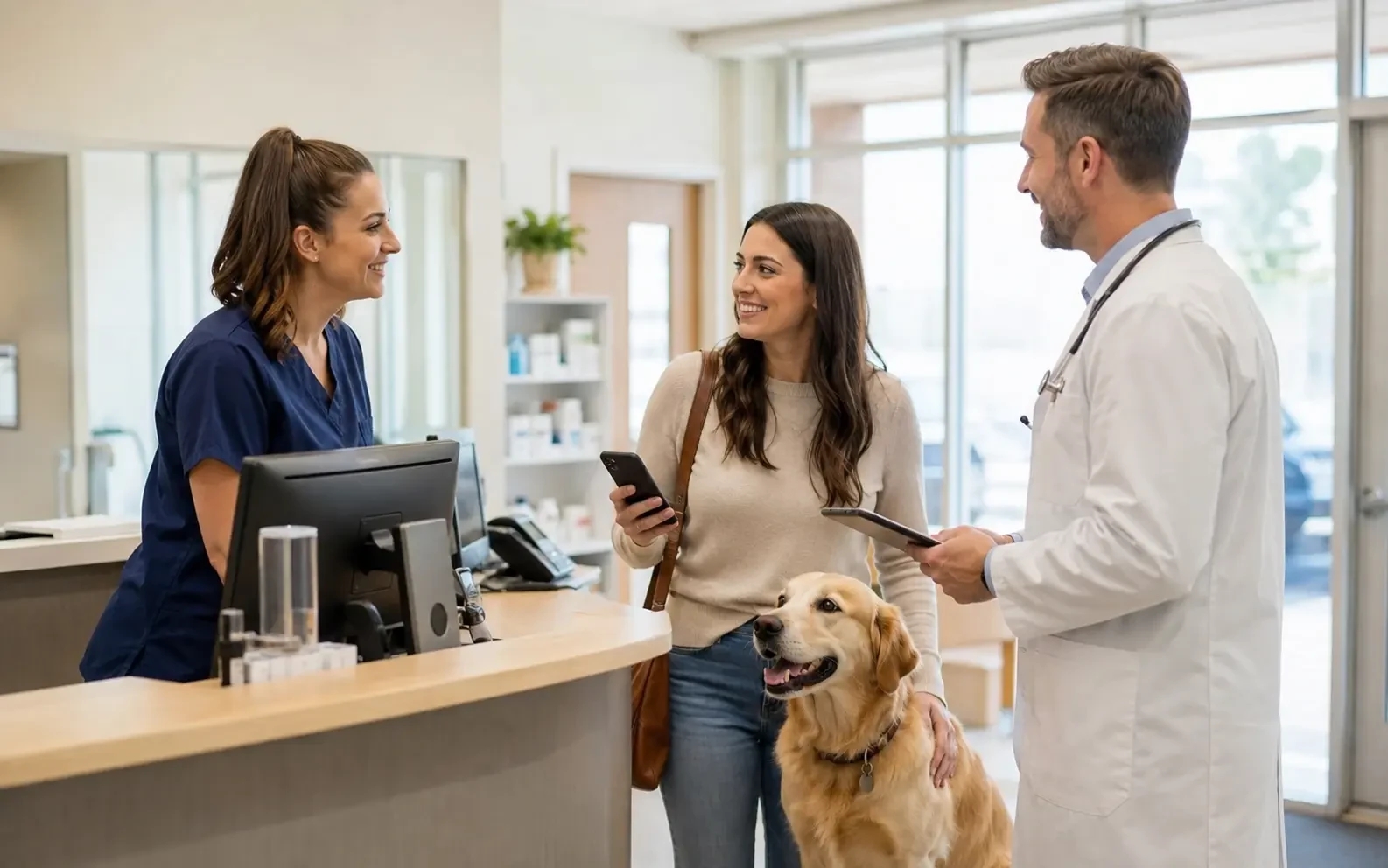
A pet owner's relationship with a veterinary practice rarely begins when they walk through the hospital doors. It often starts much earlier.
A person notices that their dog needs vaccinations, adopts a new kitten, moves to a new neighborhood, or becomes concerned about a pet's symptoms. They reach for their phone and begin searching for information or veterinary services.
They may discover a clinic through Google, visit its website, read about its services, check reviews, look for appointment availability, and eventually make contact. That sequence represents the beginning of the veterinary client journey.
For modern veterinary hospitals, the challenge is no longer simply attracting attention. The bigger opportunity is creating a connected experience that guides pet owners smoothly from discovery to appointment, from appointment to follow-up, and eventually from first-time visitor to long-term client.
When each stage operates independently, potential clients can fall through the gaps. When the stages work together, the practice can create a much stronger experience.
The Veterinary Client Journey Has Become Digital
Years ago, many veterinary relationships began primarily through word-of-mouth recommendations or a telephone call. Recommendations still matter, but the path has expanded.
Today, a pet owner might discover a clinic through a local search, social media post, online advertisement, map listing, or recommendation. Before contacting the hospital, that person may evaluate the practice digitally.
They want answers.
- Does the clinic provide the service I need?
- Where is it located?
- Can I trust this team?
- Can I schedule conveniently?
- What happens if I call after hours?
- Is the website easy to use on my phone?
These digital interactions form an impression before the veterinary team ever speaks with the prospective client. That is why veterinary growth should be considered a journey rather than a collection of individual marketing activities.
Stage One: Being Discoverable at the Right Moment
The first stage is visibility. A veterinary hospital cannot build a relationship with a prospective client who cannot find it. Search visibility is especially important because veterinary searches frequently reflect immediate intent. Someone searching for puppy vaccinations, cat dental care, veterinary wellness exams, or an animal hospital in a particular city is not simply browsing the internet.
That person may be actively deciding where to take a pet. Veterinary digital marketing therefore needs to connect services with local demand. Search engine optimization, location-focused content, service pages, paid campaigns, social media, and other channels can all contribute to discovery.
However, traffic alone should never be the final objective. A thousand website visits mean little if none of those visitors understand what the clinic offers or take the next step. The purpose of visibility is to begin a relationship.
Stage Two: Turning Discovery Into Trust
Once someone reaches a veterinary website, the question changes. The practice has been discovered. Now it needs to be evaluated. Pet owners are trusting veterinary professionals with members of their families. They want signs of competence, professionalism, accessibility, and compassion.
A veterinary website should therefore do more than look attractive. It should communicate clearly. Visitors should quickly understand the hospital's services, location, approach to care, and options for contacting or scheduling with the practice.
Mobile usability is particularly important because many searches occur when a pet owner is away from a desktop computer. A confusing website creates friction. A clear website reduces uncertainty.
This stage of the journey demonstrates why website design and marketing cannot be treated as unrelated projects. Marketing brings the visitor to the door. The website must help that visitor feel comfortable opening it.
Stage Three: Making the Next Step Obvious
One of the most important moments in the client journey occurs after a prospective client decides that a clinic appears suitable. What happens next?
If the only path is calling during limited hours, some potential clients may postpone the task.
Others may call when the team is busy and fail to connect immediately.
A strong digital journey provides clear next steps. Depending on the practice, that could include online appointment booking, a prominent telephone option, an inquiry form, or another appropriate communication channel.
The goal is not to force every pet owner into the same method. It is to remove unnecessary obstacles between interest and action.
MyVetHub's Appointment Manager, for example, supports online booking and appointment management, allowing pet owners to interact with scheduling beyond the limitations of traditional front-desk hours.
That matters because convenience is not simply a customer-service benefit. It can influence whether initial interest becomes an actual appointment.
Stage Four: Making Phone Communication Part of the Same Journey
Digital transformation does not make the telephone irrelevant. Veterinary care includes situations where clients want to speak. Some questions are too complicated for a form. Some owners simply prefer calling. Others may be unsure what type of appointment they need.
Therefore, telephone communication should not sit outside the digital client journey. It should be connected to it. An intelligent veterinary phone system can help organize incoming demand, direct conversations appropriately, capture information, and maintain continuity.
MyVetHub's AI-powered VoIP solution includes capabilities such as intelligent call routing, call summaries and transcripts, missed-call management, and AI-assisted communication.
VERA, MyVetHub's AI receptionist, can also support appropriate appointment requests and common client questions around the clock. The important point is not that every conversation should be automated. It is that a client's journey should not collapse simply because they chose the telephone instead of an online form.
Stage Five: The Appointment Experience
Successfully booking an appointment is not the end of the journey. It is the beginning of a new phase. Between booking and arrival, the practice needs to maintain clarity. Clients may need reminders. They may need to know when to arrive, what information to bring, or how to prepare for a particular visit.
Automated appointment reminders can help keep scheduled care visible without requiring employees to manually contact every client. They can also create a more consistent experience.
Consistency matters because the pet owner should not have to wonder whether an appointment was successfully scheduled or remember every detail independently.
A well-designed process provides appropriate communication at the right moments.
Stage Six: Creating a Better Consultation Experience
Technology can continue supporting the journey inside the consultation room.
Veterinary appointments generate large amounts of information. Clinicians listen to owners, examine patients, discuss findings, consider diagnostic options, explain recommendations, and document the encounter.
Documentation is essential, but it can compete with direct interaction for attention. AI-assisted transcription can help reduce this tension.
MyVetHub's AI Transcribe is designed specifically for veterinary workflows, including real-time transcription, recognition of veterinary terminology, and generation of structured SOAP notes.
When documentation becomes more efficient, veterinarians may have greater opportunity to concentrate on the conversation happening in front of them. That can support a client experience in which technology operates quietly in the background rather than becoming the center of attention.
Stage Seven: What Happens After the Visit Matters
One of the biggest mistakes in client-experience design is assuming that the relationship ends when the client leaves the hospital. For many veterinary visits, the period afterward is extremely important. The owner may need to administer medication, monitor recovery, watch for changes, schedule another visit, or follow specific care instructions.
After a procedure, owners may also be anxious about whether recovery is progressing normally.
A connected communication strategy helps maintain continuity beyond the physical appointment.
MyVetHub's AI procedure follow-up capabilities are designed to support scheduled post-procedure check-ins, procedure-specific questions, documentation, and identification of responses that may require staff attention. This illustrates a broader principle for veterinary practices: communication should follow the care journey. The hospital should not become digitally invisible as soon as the invoice is paid.
Stage Eight: Turning Episodic Visits Into an Ongoing Relationship
Veterinary medicine is inherently longitudinal. A puppy may first visit for early preventive care and continue returning throughout adulthood and senior life. A kitten becomes an adult cat. Health needs change. Vaccinations become due.
Dental care may become necessary. New conditions can emerge. The strongest veterinary relationships therefore develop over years. Digital tools can help practices remain relevant between appointments. Pet-owner applications can support appointment management, reminders, vaccination tracking, medication information, medical histories, and ongoing communication.
MyVetHub's PetVetHub app, for example, is designed to connect pet families with their veterinary practices while providing tools for managing pet information and care.
This turns the digital relationship into something more useful than occasional promotional messages. Instead, technology becomes part of ongoing pet-care organization.
Why Disconnected Tools Create Friction
A practice may already have a website, phone system, appointment calendar, marketing provider, messaging tool, and documentation process. Having technology, however, is not the same as having a connected client journey. If each tool functions separately, information and responsibility can become fragmented.
Marketing generates an inquiry, but the inquiry is not followed. A client calls, but the conversation is not easily visible to the next employee. An appointment is scheduled, but reminders require another process. A consultation occurs, but documentation becomes an after-hours task.
The client receives care, but the relationship goes quiet afterward. Every gap creates an opportunity for frustration. Connected systems aim to reduce those transitions.
Map the Journey Before Adding More Technology
Veterinary hospitals considering digital improvements should begin by mapping their current client journey.
Imagine the experience from the pet owner's perspective.
- How do people usually discover the hospital?
- What information do they see first?
- How easy is it to understand the practice's services?
- How many steps are required to request an appointment?
- What happens if they call outside normal hours?
- How are appointment details confirmed?
- What communication occurs after treatment?
- How does the practice stay connected between visits?
This exercise often reveals that the problem is not the absence of technology. It is the absence of continuity. Adding another isolated tool may not solve that problem. Connecting the stages can.
Measure Transitions, Not Just Individual Metrics
Veterinary practices frequently measure marketing traffic, phone calls, appointment volume, and client retention separately. A journey-based approach examines how one stage leads to another.
For example, practices can evaluate whether website visitors become inquiries, whether inquiries become appointments, whether scheduled appointments are completed, whether first-time clients return, and whether communication continues effectively after treatment.
This creates a clearer picture of where opportunities are being lost. If website traffic is strong but appointment requests are low, the website experience may need attention. If appointment requests are high but many calls are missed, communication capacity may be the bottleneck.
If first visits are strong but repeat visits are weak, post-visit engagement may deserve closer examination. The most useful question becomes: “Where is the client journey breaking?”
A Connected Journey Benefits Veterinary Teams Too
Improving the digital journey is not only about pet-owner convenience. It can also improve internal operations. When scheduling, communication, documentation, marketing, and follow-up processes work more cohesively, employees spend less time transferring information manually.
Front-desk teams have greater visibility. Veterinarians can access better-organized information.
Marketing activities can be connected more clearly to appointment outcomes. Managers can understand which stages of the practice require attention. The result is a digital strategy that supports both sides of veterinary care: the client experience and the employee workflow.
MyVetHub and the Connected Veterinary Experience
MyVetHub is built around the idea that veterinary growth and client engagement involve multiple connected moments.
Its solutions include veterinary-focused website development and digital marketing to support discovery, AI-powered VoIP and VERA to support communication, Appointment Manager to streamline scheduling, AI Transcribe to support clinical documentation, and additional digital tools that help practices maintain engagement.
Rather than viewing each interaction as an isolated event, veterinary hospitals can design a journey in which every stage supports the next.
- A prospective client discovers the practice.
- The website builds confidence.
- Communication makes it easy to ask questions.
- Scheduling turns interest into an appointment.
- Technology supports a smoother visit.
- Follow-up maintains continuity.
- Ongoing engagement strengthens the relationship.
That is the opportunity created by a connected veterinary ecosystem.
Conclusion
Veterinary practices do not build loyal client relationships through a single phone call, advertisement, website visit, or appointment. Relationships are built through a sequence of experiences. Every transition matters.
When those experiences are disconnected, pet owners encounter friction and veterinary teams inherit additional administrative work. When they are connected, the practice becomes easier to discover, easier to contact, easier to schedule with, and easier to remain connected to over time.
Modern veterinary technology should therefore be evaluated not simply by how many features it provides, but by how effectively it connects the complete client journey. MyVetHub helps veterinary hospitals bring together digital marketing, websites, intelligent communication, appointment management, AI-powered documentation, and client engagement tools to support that journey.
The result is a more coordinated approach to veterinary growth, one designed not just to generate attention, but to transform that attention into appointments, positive experiences, stronger relationships, and long-term client value.