The Hidden Cost of Missed Follow-Ups in Veterinary Practices - And How Automation Solves It
Veterinary practices work tirelessly to deliver compassionate care, maintain healthy patient outcomes, and build lasting relationships with pet owners. However, one operational challenge continues to quietly impact many clinics every day missed follow-up appointments.
While veterinary teams often focus heavily on attracting new clients and handling immediate patient needs, missed follow-ups can create long-term problems that affect both medical outcomes and business growth. Whether it involves wellness exams, vaccine boosters, post-surgical rechecks, chronic disease monitoring, dental care reminders, or preventive screenings, follow-up communication is one of the most important parts of modern veterinary medicine.
Unfortunately, many veterinary clinics still depend on manual reminder systems that are difficult to manage consistently. Front-desk staff already juggle phone calls, appointment scheduling, client check-ins, payments, prescription requests, and emergency communication. Adding manual follow-up tracking to these responsibilities can quickly overwhelm teams and create communication gaps.
As a result, clinics frequently experience:
- Missed appointments
- Delayed preventive care
- Lower client retention
- Increased no-show rates
- Communication inconsistencies
- Lost revenue opportunities
- Reduced workflow efficiency
This is why automation has become increasingly important in veterinary practice management.
Modern veterinary automation systems help clinics streamline communication, improve appointment compliance, reduce administrative workload, and create more predictable operational workflows. Instead of relying entirely on manual outreach, practices can now automate reminders, follow-ups, confirmations, and preventive care notifications in a consistent and organized way.
Automation is not just about saving time, it is about improving patient care, strengthening client relationships, and supporting long-term clinic growth.
Why Follow-Up Care Is Critical in Veterinary Medicine
Follow-up care plays a major role in maintaining pet health and ensuring treatment plans remain effective. Veterinary medicine depends heavily on continuity of care. Without proper follow-up communication, important preventive services and treatment plans can easily be delayed or forgotten.
Veterinary follow-ups support:
- Vaccine schedules
- Wellness exams
- Chronic disease management
- Dental cleanings
- Medication monitoring
- Parasite prevention
- Post-surgery recovery
- Senior pet care
Many health conditions develop gradually and may not show obvious symptoms early on. Regular follow-up appointments allow veterinarians to identify problems sooner and intervene before conditions worsen.
For example:
- Missed vaccine boosters can leave pets vulnerable to preventable diseases
- Delayed recheck appointments can slow recovery after surgery
- Missed wellness exams may allow chronic conditions to progress unnoticed
- Inconsistent medication follow-ups can reduce treatment effectiveness
When follow-up systems fail, both pets and clinics are affected.
The Hidden Financial Cost of Missed Follow-Ups
Many veterinary practices underestimate how much revenue is lost through missed follow-up care.
Every missed appointment may represent:
- Lost exam fees
- Missed diagnostics
- Delayed treatments
- Lost preventive services
- Reduced medication sales
- Missed dental procedures
Over time, these losses can significantly affect clinic profitability and scheduling efficiency.
Additionally, when preventive care is delayed, pets may eventually require more urgent and expensive treatment. This can increase pressure on emergency services while creating more stressful situations for pet owners.
Reactive care is often more costly and less efficient than preventive care.
Clinics that improve follow-up compliance frequently see improvements in:
- Revenue consistency
- Appointment utilization
- Preventive care participation
- Long-term client retention
Strong communication systems help create more predictable and stable business performance.
Why Manual Reminder Systems Often Fail
Traditional reminder systems rely heavily on human consistency and available time.
Veterinary front-desk teams already manage multiple responsibilities throughout the day, including:
- Answering phone calls
- Managing appointment schedules
- Processing payments
- Coordinating prescriptions
- Handling emergency communication
- Assisting in-clinic clients
When clinics rely on manual reminders, several problems can occur:
- Staff forget to send reminders
- Follow-up timing becomes inconsistent
- Communication gets delayed during busy periods
- Overdue appointments are difficult to track
- Reminder calls consume excessive time
As veterinary practices grow, these manual processes become increasingly difficult to sustain.
Human error is not the result of poor effort, it is often the result of overloaded systems.
Automation helps reduce these operational pressures while improving communication consistency.
How Veterinary Automation Improves Follow-Up Communication
Veterinary automation systems allow clinics to create consistent communication workflows without relying entirely on manual effort.
Modern systems can automatically send:
- Vaccine reminders
- Wellness exam notifications
- Medication refill alerts
- Recheck appointment reminders
- Dental care reminders
- Preventive care updates
- Senior pet monitoring reminders
- Post-surgery follow-ups
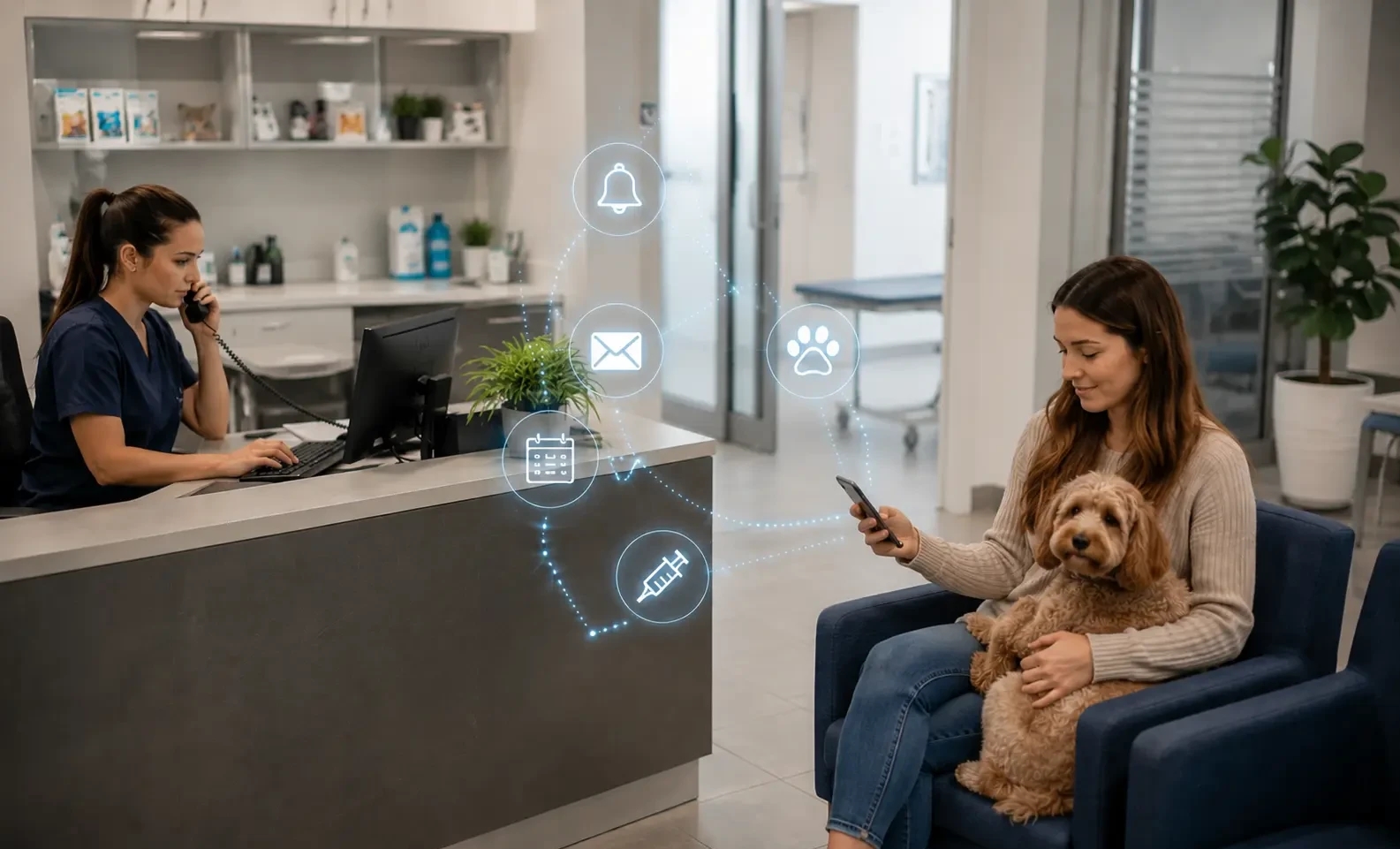
These communications can be delivered through:
- Text messages
- Emails
- Automated voice calls
- Mobile notifications
Automation ensures reminders are sent on time and consistently.
Instead of staff manually tracking every patient’s schedule, automation systems help maintain organized communication across the clinic.
This improves:
- Appointment attendance
- Preventive care compliance
- Workflow efficiency
- Client engagement
Consistent communication creates better continuity of care for pets while reducing administrative burden for veterinary teams.
Improving Client Retention Through Proactive Communication
Pet owners value clinics that stay connected and provide organized care experiences.
When clients receive timely reminders and clear communication, they feel:
- Supported
- Appreciated
- More informed
- More confident in the clinic
Convenient communication experiences often lead to:
- Stronger loyalty
- Higher retention rates
- Better online reviews
- Increased referrals
Clients are more likely to return to practices that make pet care easier to manage.
Automation helps veterinary clinics maintain ongoing relationships with clients instead of only communicating during emergencies or scheduled visits.
Proactive communication strengthens trust over time.
Reducing Front-Desk Overload and Burnout
Administrative burnout is one of the biggest operational challenges in veterinary medicine today.
Reception teams often experience constant interruptions from:
- Phone calls
- Appointment requests
- Payment questions
- Emergency inquiries
- Prescription refills
Adding manual follow-up outreach to these tasks increases stress and reduces efficiency.
Automation helps reduce repetitive administrative work by managing:
- Reminder scheduling
- Appointment confirmations
- Follow-up sequences
- Preventive care notifications
This allows staff to focus more on:
- In-clinic patient support
- Emergency coordination
- Personalized client interactions
- Workflow organization
Reducing administrative overload also improves:
- Team morale
- Productivity
- Staff retention
- Operational consistency
Veterinary teams perform better when communication systems are organized and efficient.
Improving Preventive Care Compliance
Preventive care is one of the most valuable services veterinary clinics provide.
However, preventive care often depends on timely reminders and consistent communication.
Automation helps improve compliance for:
- Vaccinations
- Parasite prevention
- Wellness screenings
- Dental care
- Nutritional consultations
- Senior wellness programs
When reminders are automated and delivered consistently, pet owners are more likely to schedule appointments before issues become serious.
Better preventive care compliance leads to:
- Healthier pets
- Earlier disease detection
- Reduced emergency visits
- More stable clinic revenue
Preventive medicine benefits both patients and practices.
Better Scheduling and Workflow Efficiency
Missed follow-ups can create major scheduling inefficiencies.
No-shows and inconsistent appointment attendance often lead to:
- Schedule gaps
- Revenue instability
- Staff downtime
- Workflow disruptions
Automation improves scheduling efficiency by helping clinics:
- Confirm appointments
- Reduce no-shows
- Fill overdue appointments
- Maintain organized schedules
Better scheduling consistency allows clinics to:
- Maximize appointment capacity
- Improve productivity
- Reduce operational stress
- Create smoother daily workflows
Organized communication systems support stronger operational performance across the entire practice.
Data and Analytics Improve Communication Strategies
Modern veterinary automation platforms also provide valuable reporting and analytics tools.
Clinics can track:
- Reminder effectiveness
- Appointment attendance rates
- Follow-up compliance trends
- Client engagement metrics
- Revenue recovery opportunities
These insights help clinics identify communication gaps and improve decision-making.
For example:
- Certain reminder methods may perform better than others
- Specific appointment types may require additional follow-up
- Seasonal trends may affect compliance rates
Data-driven communication strategies allow clinics to continuously optimize operational performance.
Automation Supports Better Patient Outcomes
Ultimately, the goal of automation is to improve patient care.
Consistent communication helps ensure pets receive:
- Timely preventive services
- Proper treatment monitoring
- Ongoing chronic care support
- Faster follow-up scheduling
When communication systems improve, patient outcomes improve as well.
Automation reduces the risk of pets falling through administrative gaps and helps clinics maintain stronger continuity of care.
The Future of Veterinary Client Communication
Veterinary practices are increasingly adopting automation as communication demands continue to grow.
Clinics that modernize their follow-up systems can:
- Improve efficiency
- Strengthen client retention
- Increase appointment compliance
- Reduce staff stress
- Support long-term growth
Automation does not replace compassionate care, it supports veterinary teams by creating more organized, efficient, and reliable communication systems.
The future of veterinary medicine depends not only on clinical expertise but also on smarter operational strategies that improve consistency and client engagement.
Practices that invest in automation today will be better positioned to deliver stronger patient care and sustainable business growth tomorrow.