
Why Modern Veterinary Websites Need More Than Just Online Booking
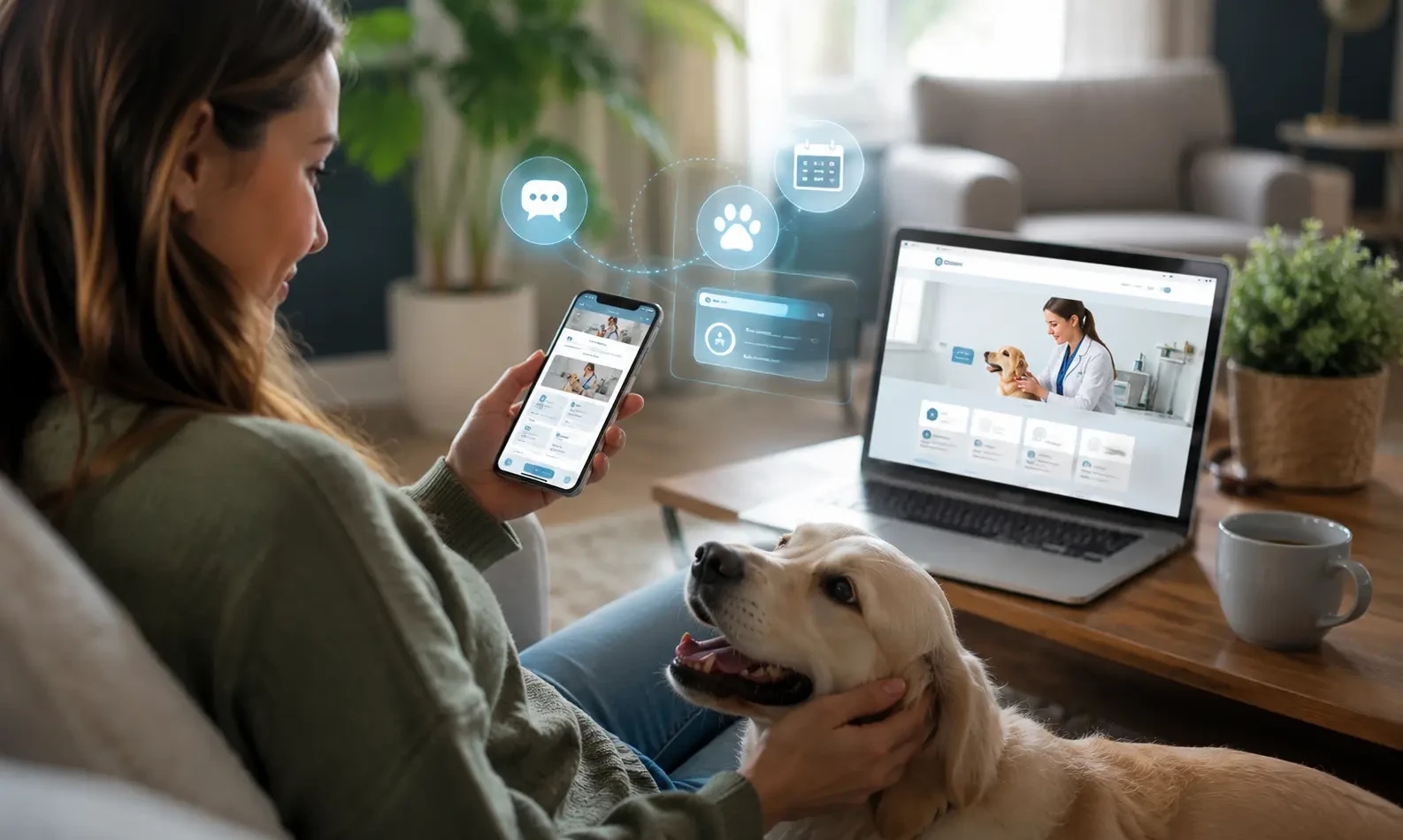
A veterinary clinic’s website has become one of the most important tools for attracting, engaging, and retaining clients. Today’s pet owners expect far more than basic contact information and an online booking button. They want convenience, trust, accessibility, education, and fast communication all before they ever step into the clinic.
For many veterinary practices, the website is the first interaction a pet owner has with the clinic. That first impression often determines whether the visitor books an appointment, continues searching elsewhere, or contacts a competing practice.
While online appointment scheduling is important, modern veterinary websites need to do much more. Clinics that rely only on online booking without improving the overall digital experience may struggle with client engagement, SEO visibility, and long-term retention.
Modern veterinary websites must now support:
- Mobile optimization
- Search engine visibility
- AI-powered communication
- Conversion-focused design
- Trust-building content
- Client education
- Fast user experience
- Long-term engagement strategies
As competition continues to increase in the veterinary industry, practices need websites that actively support growth instead of simply functioning as digital brochures.
The Veterinary Website Has Become the Digital Front Door
Pet owners often research veterinary clinics online before deciding where to seek care. They compare services, read reviews, explore clinic photos, and evaluate communication quality before making contact. A poorly designed website can quickly damage trust.
If a website:
- Loads slowly
- Looks outdated
- Is difficult to navigate
- Fails on mobile devices
- Lacks important information
- Makes communication difficult
Potential clients may leave within seconds.
A modern veterinary website should immediately communicate:
- Professionalism
- Compassion
- Reliability
- Accessibility
- Convenience
The digital experience directly influences how pet owners perceive the quality of care the clinic provides.
Online Booking Is Only One Small Piece of the Experience
Many veterinary clinics believe adding online booking is enough to modernize their website. While appointment scheduling is valuable, it only solves one part of the client journey.
Pet owners still need answers to important questions such as:
- Does the clinic handle emergencies?
- What services are available?
- Who are the veterinarians?
- Is the clinic trustworthy?
- What are the hours?
- How quickly can someone respond?
- Does the clinic work with anxious pets?
- What should I expect during visits?
If a website cannot answer these questions clearly and efficiently, visitors may never complete the booking process.
Modern veterinary websites must guide visitors through the entire decision-making experience, not just appointment scheduling.
Mobile Optimization Is No Longer Optional
Most veterinary website traffic now comes from mobile devices.
Pet owners frequently search for veterinary services while:
- Traveling
- Working
- Managing emergencies
- Caring for pets at home
A website that is not mobile-friendly creates major usability problems.
Poor mobile experiences often include:
- Tiny unreadable text
- Slow loading pages
- Broken layouts
- Difficult forms
- Confusing navigation
These issues frustrate users and increase website abandonment.
Mobile optimization improves:
- User experience
- Search engine rankings
- Appointment conversions
- Client accessibility
Modern veterinary websites must function smoothly across:
- Smartphones
- Tablets
- Desktop devices
A seamless mobile experience helps clinics remain competitive in today’s digital environment.
Veterinary SEO Helps Clinics Get Found Online
Even the best-designed veterinary website cannot generate results if clients cannot find it.
Search engine optimization (SEO) helps veterinary clinics appear in search results when pet owners look for services such as:
- Emergency vet near me
- Dog vaccinations
- Cat wellness exams
- Pet dental cleaning
- Veterinary ultrasound
- Animal hospital services
Strong veterinary SEO involves:
- Optimized service pages
- Local keyword targeting
- Fast page speeds
- Mobile responsiveness
- Educational blog content
- Proper metadata
- Google Business Profile integration
Veterinary clinics that invest in SEO increase their online visibility and attract more qualified traffic.
Without SEO, clinics risk losing potential clients to competitors who appear higher in search rankings.
Trust-Building Features Increase Client Confidence
Pet owners want reassurance before trusting a clinic with their pets.
Modern veterinary websites should include trust-building elements such as:
- Veterinarian profiles
- Staff introductions
- Client testimonials
- Real clinic photos
- Certifications and affiliations
- Educational resources
- Transparent communication
- Emergency information
These features help visitors feel more comfortable and confident before contacting the clinic.
Trust-focused websites often generate:
- Higher conversion rates
- Increased appointment requests
- Better client retention
- More referrals
People are more likely to choose clinics that appear professional, approachable, and transparent online.
AI Chat Support Improves Accessibility
Today’s clients expect fast responses and convenient communication.
AI-powered chat support is becoming increasingly valuable for veterinary websites because it allows clinics to provide immediate assistance even outside business hours.
AI website chat systems can:
- Answer common questions
- Guide appointment requests
- Share clinic hours
- Explain services
- Provide emergency guidance
- Capture leads
This improves communication accessibility while reducing front-desk workload.
AI chat support also helps clinics engage visitors who may otherwise leave the website without making contact.
In many cases, faster communication directly improves appointment conversion rates.
Website Speed Impacts User Experience and SEO
Website speed plays a major role in both client experience and search engine performance.
Slow websites frustrate users and increase bounce rates. Pet owners seeking urgent care may quickly abandon a site that takes too long to load.
Fast-loading websites improve:
- User satisfaction
- SEO rankings
- Mobile usability
- Conversion rates
Modern veterinary websites should prioritize:
- Optimized images
- Clean coding
- Mobile responsiveness
- Efficient hosting
- Minimal loading delays
A faster website creates a smoother and more professional digital experience.
Educational Content Builds Long-Term Engagement
Educational resources help veterinary clinics establish authority and strengthen relationships with pet owners.
Publishing blogs and FAQs allows clinics to:
- Educate clients
- Improve SEO performance
- Increase website traffic
- Build trust
- Support preventive care awareness
Topics may include:
- Vaccinations
- Pet nutrition
- Dental care
- Emergency preparedness
- Parasite prevention
- Wellness exams
Educational content keeps visitors engaged longer while positioning the clinic as a trusted resource.
This also creates opportunities for repeat website visits and stronger client loyalty.
Conversion-Focused Design Drives Better Results
A veterinary website should be designed to guide visitors toward action.
Conversion-focused design helps users:
- Schedule appointments
- Call the clinic
- Request information
- Access emergency care
- Explore services easily
Important conversion elements include:
- Clear call-to-action buttons
- Click-to-call functionality
- Visible contact information
- Simple navigation
- Easy online forms
- Emergency service visibility
Reducing friction in the user journey helps increase appointment requests and client engagement.
Small design improvements can significantly impact business growth.
Better Websites Improve Client Retention
A veterinary website should not only attract new clients, it should also support existing relationships.
Modern websites help improve retention through:
- Educational updates
- Online resources
- Automated reminders
- Easy communication tools
- Accessible service information
Clients are more likely to remain loyal to clinics that provide convenient digital experiences.
Strong communication and accessibility create long-term trust and satisfaction.
The Future of Veterinary Websites
Veterinary websites are evolving rapidly as client expectations continue to grow.
Modern practices need websites that function as:
- Communication hubs
- Marketing platforms
- Educational resources
- Lead generation tools
- Client engagement systems
Online booking alone is no longer enough.
Clinics that invest in complete digital experiences can:
- Improve SEO visibility
- Increase appointment conversions
- Strengthen client trust
- Enhance communication
- Support long-term growth
A modern veterinary website should actively help the clinic grow while creating a smooth, professional, and trustworthy experience for every visitor.
The future of veterinary growth depends not only on quality medical care but also on smarter digital experiences that connect clinics with pet owners more effectively than ever before.