AI Visit Notes That Don’t Just Save Time-They Improve Care Continuity
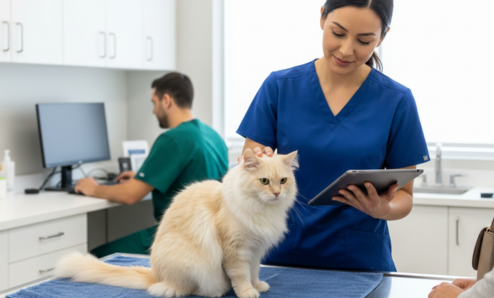
Veterinary teams don’t struggle because they lack compassion or clinical skill. They struggle because their attention gets divided between the patient in the room and the documentation that has to happen after. Notes must be accurate, complete, and defensible. They also have to be fast enough to keep the day moving. That tension is where burnout lives.
For years, “better documentation” has meant one of two things: work later (after hours) or document less (and accept risk). But there’s a third path now-AI-assisted transcription and note creation that supports the veterinarian’s workflow without replacing clinical judgment.
MyVetHub offers an AI transcription capability as part of its platform ecosystem. The real value isn’t just typing faster-it’s creating a documentation system that improves continuity of care, reduces client confusion, and protects the practice.
Why documentation is a growth issue, not just an admin issue
Incomplete or delayed notes don’t only affect records. They affect:
- Follow-up quality: If the plan is unclear, the client calls back.
- Team handoffs: When cases get passed between doctors or shifts, missing context leads to repeated work.
- Revenue leakage: A missed recommendation, add-on, or recheck timeline often becomes a missed appointment.
- Risk exposure: Vague documentation makes compliance harder and disputes messier.
In other words, documentation is operational. It influences client experience, efficiency, and retention.
What “AI Transcribe” should actually do in a veterinary clinic
When clinics hear “AI transcribe,” they often imagine raw dictation text pasted into a chart. That’s not the goal. The goal is structured, usable information.
A practical AI documentation workflow should help teams:
- Capture clinical conversations and findings accurately
- Convert those into a clear medical note format (e.g., structured sections)
- Produce client-friendly visit summaries that reduce confusion
- Keep everything tied to the patient record so it’s searchable later
The best systems make documentation feel like a natural extension of the appointment rather than an extra job afterward.
The biggest win: clearer client communication after the visit
Veterinary care is emotionally intense for pet owners. Even when the doctor explains everything perfectly, clients often forget details the moment they leave, especially medication instructions, monitoring signs, and recheck timing.
AI-supported visit summaries can change that. When a platform can generate a clean recap-what was found, what was prescribed, what to watch for, what’s next-the clinic reduces:
- “Can you repeat what the doctor said?” calls
- Medication errors from misunderstood instructions
- Missed rechecks due to vague next steps
This is one of the most overlooked “retention features” in modern vet care: the client feels supported after they walk out.
Better handoffs, fewer repeated conversations
Every clinic knows the pattern:
- A client calls with a question.
- The team hunts for context.
- Someone re-explains the plan.
- The doctor gets interrupted.
- The clinic runs behind.
With consistent, searchable documentation, the team can confidently answer: “Here’s what we discussed, here’s the plan, and here’s the recheck timeline.” That kind of clarity makes a clinic feel organized, and clients trust organized clinics.
Documentation quality also improves training
For multi-doctor practices, relief doctors, and growing teams, documentation is where standards live. When notes are consistent, newer staff learn faster because the “house style” becomes visible in records. This reduces dependence on tribal knowledge and makes onboarding smoother.
The boundaries matter: what AI should not do
A responsible AI documentation workflow respects clinical reality:
- It shouldn’t invent findings
- It shouldn’t replace diagnosis
- It shouldn’t finalize records without review
- It shouldn’t oversimplify medical nuance in client summaries
The best approach is “AI drafts, clinicians decide.” That keeps medical responsibility where it belongs while still saving time.
Implementation tip: Start with one appointment type
Clinics that adopt AI documentation successfully don’t try to change everything in week one.
They start with a repeatable format:
- Annual wellness exams
- Dermatology rechecks
- Post-surgical follow-ups
Once the team sees quality and time savings, adoption spreads naturally.
Closing: the practice that documents well serves better
AI transcription isn’t just a convenience. Done correctly, it becomes a quality system:
- More consistent records
- Better client understanding
- Smoother handoffs
- Fewer interruptions
- Less after-hours documentation
MyVetHub positions itself as a platform built for veterinary operations and engagement. AI-assisted documentation fits that mission because it improves both clinical continuity and client experience, two of the biggest drivers of modern practice growth.